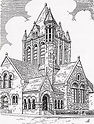
TRINITY
UNITED PRESBYTERIANCHURCH
UNIONTOWN, PENNSYLVANIA

MUSIC AT TRINITY
TRINITY MUSIC MINISTRY
Music is an essential part of worship at Trinity United Presbyterian Church. Through congregational singing, choral music, handbells, organ and piano music, and seasonal offerings, Trinity’s music ministry gives voice to prayer, praise, thanksgiving, lament, and hope.
Rooted in the Reformed tradition, worship at Trinity places particular importance on the song of the gathered congregation. Hymns, anthems, instrumental music, and other musical offerings are not simply additions to worship, but ways in which scripture, theology, memory, and prayer are given voice.
Trinity’s music ministry brings together singers, ringers, instrumentalists, organists, pianists, and members of the congregation in a shared offering of music. New participants are always welcome, whether they bring years of musical experience or are discovering a new way to serve.
ENSEMBLES
Chancel Choir
Trinity’s SATB Chancel Choir helps lead the congregation in worship through hymns, anthems, responses, and seasonal music. The choir sings during Sunday worship from September through June and participates in Christmas Eve, Easter,
and other special services throughout the church year.
Its work is both musical and pastoral. Through careful preparation of sacred texts and a broad range of choral repertoire, the choir supports congregational singing, deepens the themes of worship, and offers music on behalf of the gathered church.
The Chancel Choir welcomes singers with a range of musical backgrounds and experience.
Rehearsals are held on Thursdays at 7:00 p.m.
Handbell Choir
Trinity’s Handbell Choir brings a distinctive sound to the musical life of the church. Through the combination of individual bells into a single ensemble, handbell music is by nature collaborative, requiring each ringer to contribute to the whole.
The choir offers music that can be contemplative, festive, delicate, or joyful, participating in worship through preludes, offertories, seasonal selections, and other musical offerings from September through June.
The Handbell Choir welcomes both experienced ringers and those interested in learning.
Rehearsals are held on Thursdays at 6:00 p.m.
INSTRUMENTS
THE AUSTIN-WALKER ORGAN
The organ at Trinity United Presbyterian Church is one of the defining musical and architectural voices of the sanctuary. Originally built in 1951 by Austin Organs, Inc. of Hartford, Connecticut, the instrument was installed for First Presbyterian Church of Uniontown as part of a major renovation of the chancel, replacing a 1905 Hook & Hastings instrument. That project reshaped the front of the sanctuary and placed a substantial new organ at the center of the church’s worship and musical life.
Austin’s Opus 2135 was a three-manual instrument of 46 ranks and 2,860 pipes. Its Great and Pedal divisions were placed behind the reredos, while the Swell and Choir divisions were housed in side chambers behind grilles. The result was an instrument closely integrated with the architecture of the room, capable of supporting congregational singing with strength while also providing the color and flexibility needed for choral accompaniment, solo repertoire, and ceremonial music.
In 1962, First Presbyterian Church and Second Presbyterian Church merged to form Trinity United Presbyterian Church, and the Austin organ became part of the new congregation’s continuing story. Pipework associated with Uniontown’s former Presbyterian instruments was later incorporated into an organ renovation at Third Presbyterian Church. Local accounts also suggest that Second Presbyterian may have contributed additional pipework to the Trinity instrument around the time of the merger, although this detail remains unconfirmed.
From 2007 through 2009, the organ underwent a major renovation and expansion by Walker Technical Company of Zionsville, Pennsylvania. Walker has carried out work for churches and institutions across the country, including Washington National Cathedral. At Trinity, the project preserved the historic Austin pipework while substantially expanding the instrument’s tonal resources and modernizing its control system.
The renovation transformed the organ into the large hybrid instrument heard today. It contains 103 speaking stops and 91 ranks: 37 pipe and 54 digital. Its resources range from quiet flutes and strings to broad principal choruses, colorful solo voices, and commanding festival reeds. This tonal breadth allows the organ to lead congregational hymnody, accompany choirs and soloists, support weddings and funerals, and present organ literature from many periods and traditions.
The renovation also included a new four-manual movable console built by R. A. Colby of Johnson City, Tennessee. Colby consoles are highly regarded for their craftsmanship, ergonomic design, and careful attention to the practical needs of organists. Trinity’s console provides a flexible and thoughtfully designed means of controlling the instrument’s extensive pipe and digital resources.
For more than seventy years, the organ has accompanied generations of worshipers through weekly services, weddings, funerals, concerts, civic occasions, and moments of celebration and remembrance. Though the instrument has changed considerably since 1951, its purpose has remained constant. At Trinity, the organ is first and foremost a servant of worship: supporting the congregation’s song, shaping the atmosphere of prayer, and giving musical voice to praise, thanksgiving, lament, and hope.
Questions?
Contact our organist, Badyn Woodford,
by clicking here.


STEINWAY & SONS PIANOS
Trinity’s music ministry is also supported by three New York-built Steinway pianos.
The Steinway Model A grand piano in the sanctuary, purchased and built in 1894, provides a warm and versatile voice for worship, choral accompaniment, solo music, chamber music, and special services. Its presence allows the musical life of the sanctuary to move naturally among organ-led hymnody, piano-accompanied song, and instrumental offerings.
Two Steinway Model 45 upright pianos, built in 1963, serve the chapel and choir rehearsal room, respectively. These instruments support smaller services, rehearsals, preparation, teaching, and the weekly musical work that takes place beyond the sanctuary. Together, Trinity’s three Steinway pianos provide an important complement to the organ and support music-making throughout the church.
GET INVOLVED
Summer Special Music
During the summer months, Trinity’s worship is enriched by seasonal special music. Vocalists, instrumentalists, and small ensembles offer music
that reflects the gifts of the congregation and the wider community.
These offerings provide musical variety during the summer season while continuing Trinity’s commitment to thoughtful, beautiful, and worshipful music. Soloists and guest musicians contribute to the life of worship through vocal solos, instrumental works, chamber music, and other sacred offerings.
Summer Organ Scholar Program
Trinity has also supported the formation of emerging church musicians through its Summer Organ Scholar Program.
The program has provided young organists with practical experience in sacred music, worship leadership,
hymn playing, service preparation, and congregational ministry.
Although the program is not currently active, it remains an important part of Trinity’s recent musical history and reflects the
congregation’s commitment to encouraging future leaders in sacred music.
WANT TO LEARN MORE?
Contact Trinity's Music Staff:
Bill Dreucci, Director of Music
Badyn Woodford, Organist